How to Make Indonesian Fried Rice
or Nasi Goreng
Nasi is the staple of the Indonesian
diet. Plain white rice is eaten at every meal—breakfast, lunch and dinner. If
you didn’t eat rice, Indonesians believe that you didn’t really eat.
Beras, or uncooked rice, is the basis of many
other dishes too. Lontong, is rice cooked in a special way, so
that it makes a compact gooey rice cake—for lack of a better word—that are
eaten primarily during special occasions instead of the usual white rice. It’s
actually quite tasty, though also plain.
The accompanying vegetable and meat
dishes are usually so flavorful that the plainness of the rice or lontong is
very complementary. It also helps balance out dishes that are really pedas, or spicy.
There are many other sweet dessert
dishes derived from rice and some varieties of krupuk, which are Indonesian’s version of tasteless,
crispy rice cake. After four months I’ve learned to like krupuks, but it’s
definitely an acquired taste, with zero nutritional value.
The preferred way to cook everything in
Indonesia is by frying it in vegetable oil, or (insert food name) goreng. Naturally, nasi goreng is the most flavorful type of rice and
it is usually served with sliced cucumber and a fried egg. Indonesians always
ask me what my favorite Indonesian food is and so far, it’s definitely nasi
goreng. No contest. (Except for tempe, but I’m not counting that as a dish.)
***
I hardly ever cook anything, so cooking
even this simple dish is a huge deal and I got to make my momma proud by
showing evidence of my first time cooking nasi goreng all
by myself.
There
are a million ways to cook Indonesian fried rice, but here’s how they do it at
my house.
Nasi Goreng Recipe (Bondowoso
Style)
Prep time: Depends on how fast you can chop
up the ingredients. I take a long time to cut things. It also cuts a lot of
time if the rice is already cooked. We use leftover rice, while fresh new rice
is cooking. (*A helpful reader pointed out that it’s important to use leftover
rice because it has less moisture. The full explanation is here.)
Calories: We don’t believe in counting those
in Indonesia, and we’re fans of the empty calories (i.e. krupuks).
Ingredients:
- A handful of shallots
- A handful of garlic
- 2 eggs
- A handful of red chili peppers
- One large red chili pepper
- About 5 cups of cooked rice
- Vegetable oil
- Salt
- Cucumber (optional)

My ibu really
got into this project and insisted that we photograph the ingredients arranged
in this green, leaf-shaped plate.
Steps:
1)
Cut the red shallots, garlic, and red chili peppers.
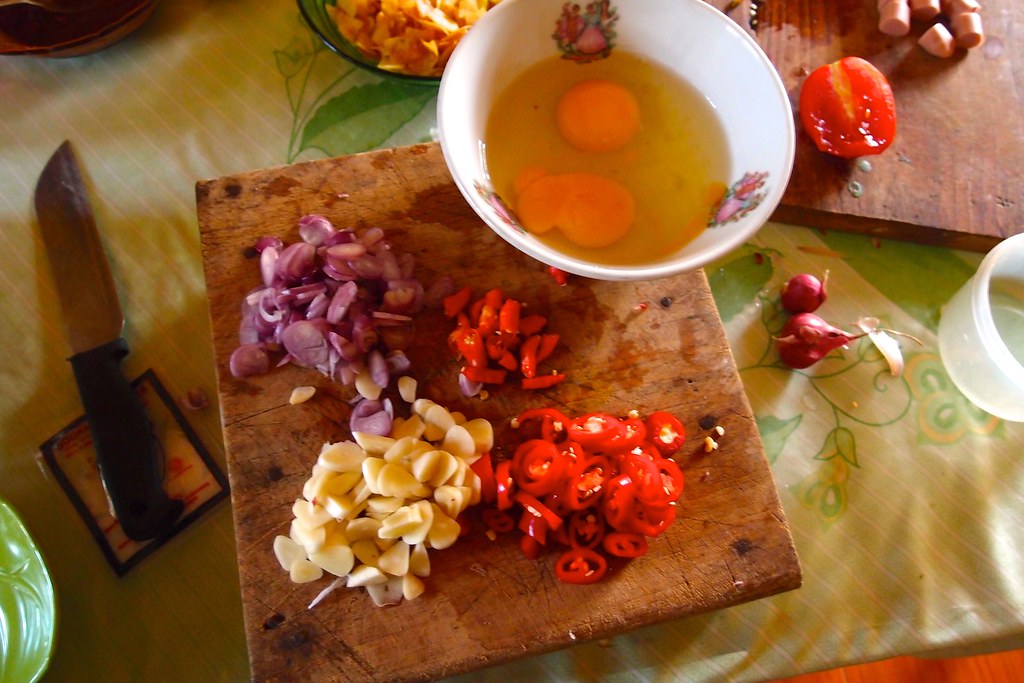
My ibu laughed
incessantly when I wept over the shallots as I cut them. I’m not used to it, ok?
2)
Fry all this together using a wok-like pan and about ¼ cup of vegetable oil.
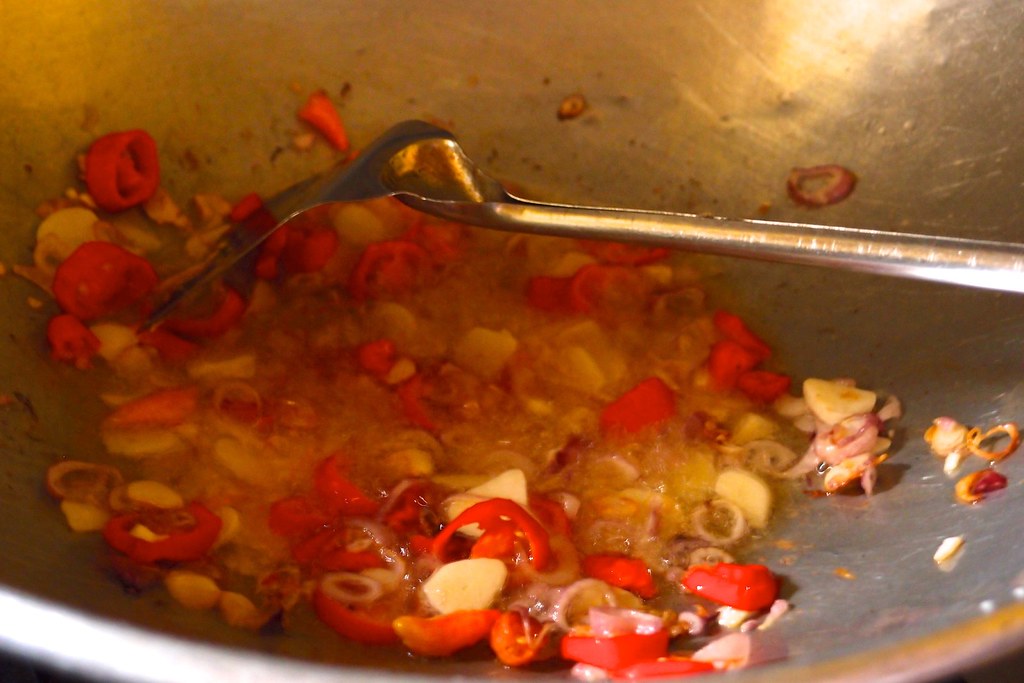
3) Once the mixture is sufficiently soft and cooked, remove it from the oil. Use a stone grinder to mash the ingredients;. Add about 1 teaspoon of salt.
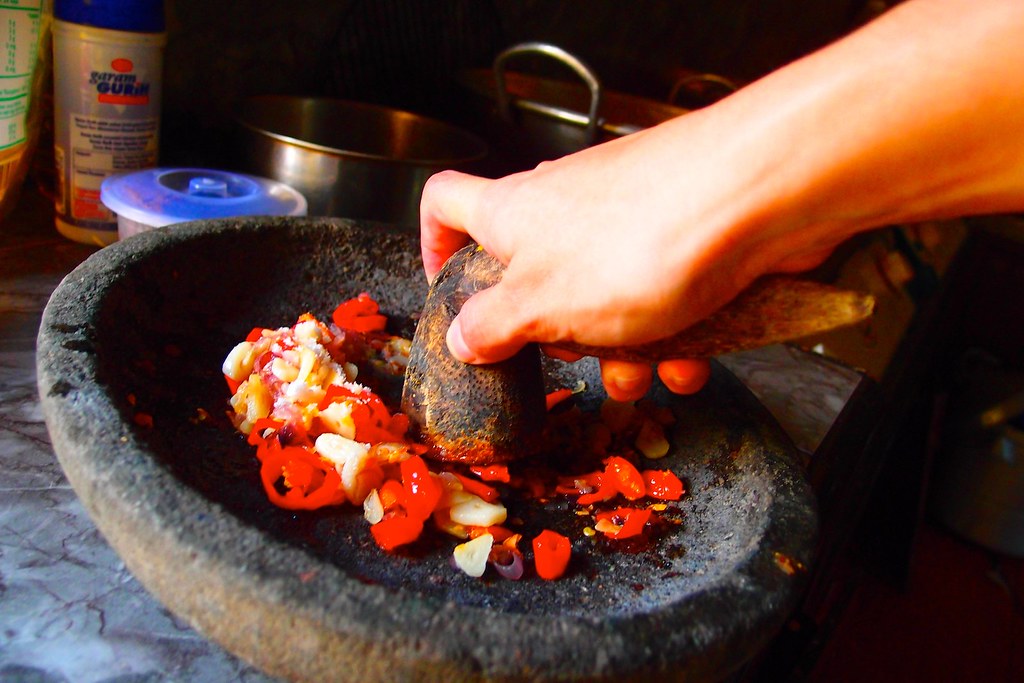
Here’s my
attempt at grinding…
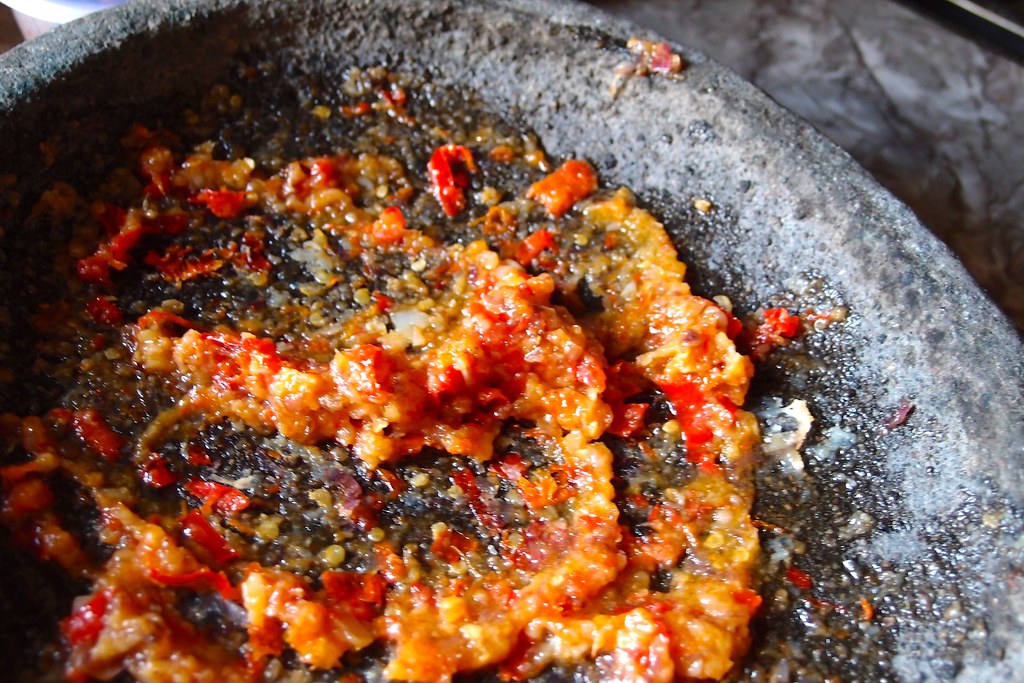
and this is the
result once my ibu lent a helping hand. She insists that I will learn
eventually. Perhaps that is true, but it may not be worth the pain to my hand.
4)
Crack two eggs and scramble in the same wok with same, leftover oil.
5) Once the eggs are scrambled, stir in about 5 cups of cooked, white rice.
5) Once the eggs are scrambled, stir in about 5 cups of cooked, white rice.
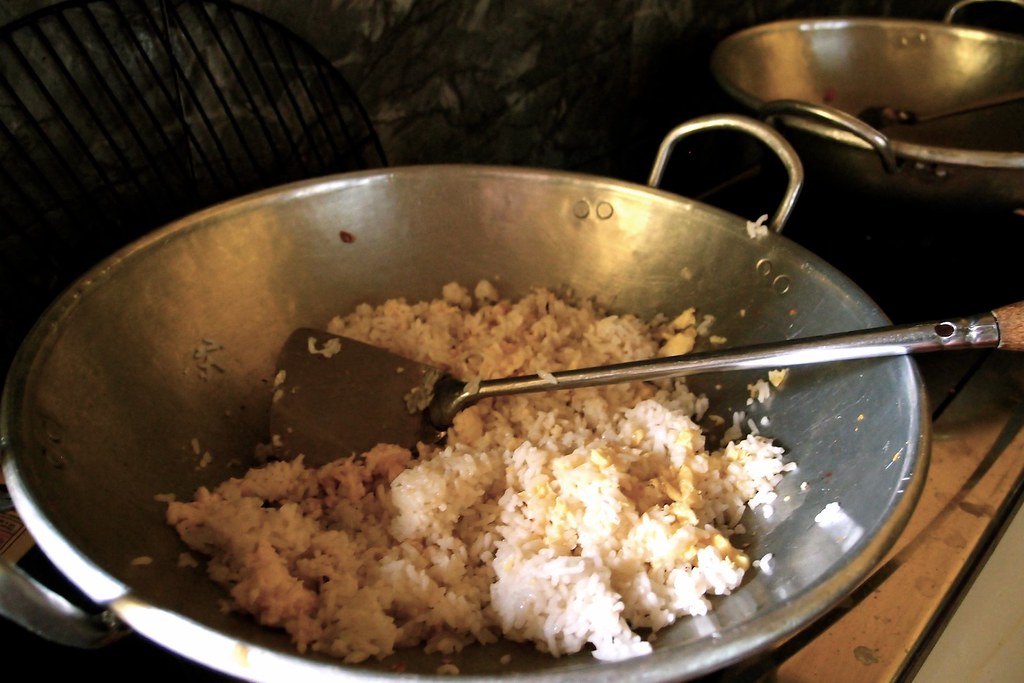
The scrambled
eggs are beneath the pile of rice, that later get mixed together.
6)
Stir in the ground mixture of garlic, peppers and shallots.
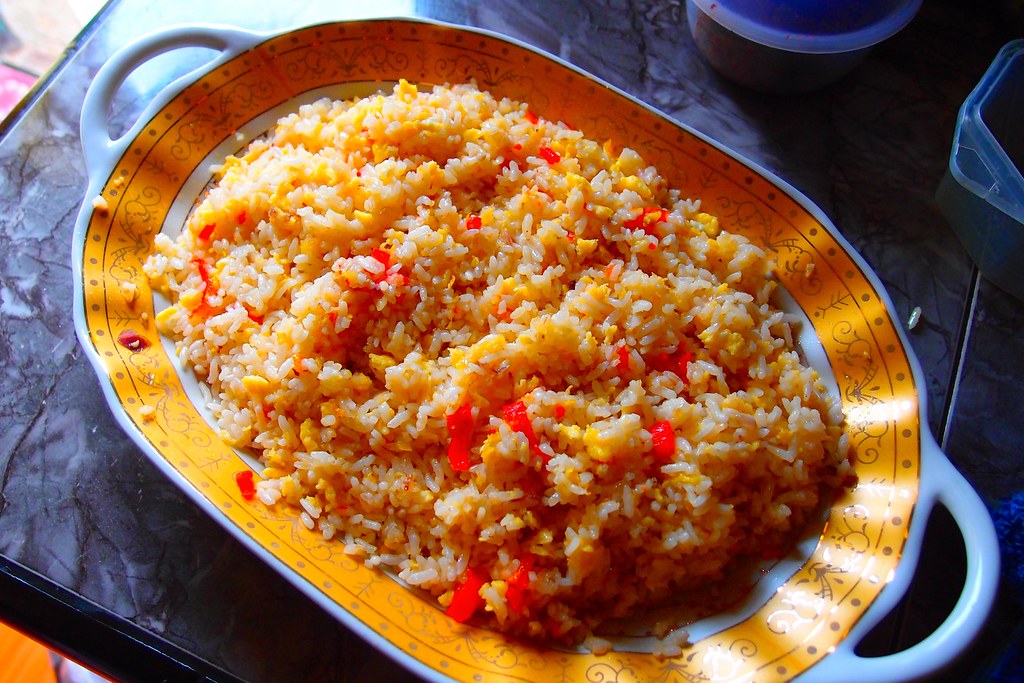
(Insert drum
roll) Tad-ah, Nasi Goreng!
Selasai! Done!

My ibu was so
into this that she insisted on making cucumber flower garnish for a photo. Hers
were lovely, and mine…a total fail. The good thing about mistakes is you get to
eat them…but needless to say, I ate most of the cucumber. (Hence, clever angle
of this plate.) Baby steps, Ibu, baby steps.

No comments:
Post a Comment